

For a time, Jove and Ivers were inseparable. Jove needed Ivers: he relied on his friendships with influential figures like Harold Ramis, and on the fact that his long-time partner was a studio executive. But Ivers’ life was branching out. As his stock rose, Jove remained solely focused on New Wave Theatre. Despite the show’s cult success, Ivers grew tired of his role.
He found new momentum writing songs for Diana Ross and the Pointer Sisters, and following his split with Fisher, he relocated to a downtown loft. Friends recall him working nonstop - writing scripts, composing music, chasing ideas. Yet the creative landscape was shifting. Younger artists were passing him by, and the industry itself was transforming. Still, a recent script sale brought both a financial windfall and a renewed sense of direction, and for the first time in years, he felt optimistic.
As Ivers’ interest in New Wave Theatre waned, Jove’s tyrannical behaviour intensified. His mistreatment of practically everyone around him escalated due to an atypical factor: the arrival of John Belushi’s super high-grade cocaine. Before that, Jove was reportedly doing “shitty coke,” but once his nose encountered Belushi’s potent powder, his already volatile behaviour spiralled.
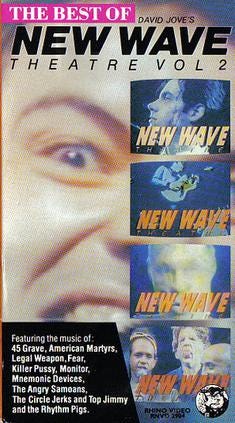
A walking bundle of unpredictable energy, he adopted extreme habits, such as blindfolding his own daughter when she visited and wearing a mask if he was ever required to appear on New Wave Theatre. Ultimately, the project was doomed to failure. Just as success came within reaching distance, it had to be destroyed.
On Ivers’ final day, he stopped by the William Morris Agency to pick up a cheque worth roughly $50,000 in today’s money - one of the largest sums he’d ever received - for a rock-musical script he’d sold to Warner Bros. He took along Peter Rafelson, son of Easy Rider producer Bob Rafelson, who wanted to play Jove his demo en route. At The Cave, as usual, the coke and booze came out. After hearing the demo, Jove erupted, screaming at them that it was shit and ordering them to leave.
After cashing the cheque, having lunch, and meeting with Franny Goldie - a friend of Ivers - he returned to The Cave a few hours later to record a New Wave Theatre monologue. He got it in one take, a rarity given that sessions were often bogged down by Jove’s micromanagement. By this point, the pair had worked relentlessly on the show for 25 episodes, with Ivers lending Jove’s work both credibility and a crucial Hollywood link - one Jove was desperate not to lose. But Ivers was done and needed to break the news.
As always, The Cave was full of partygoers, but Ivers managed to pull Jove aside. The discussion began quietly before breaking into a cacophony of outbursts. Jove was crushed. He needed Peter. Peter shouted back - uncharacteristically for him - then peeled away from the party, offering a casual “ciao” on his way out. He went home, made some calls, and retired to bed - fully clothed and with the light still on. Hours later, he was murdered. His killer was never found.
David Jove died in 2004 at the age of 61. He spent the rest of his life in a fug of paranoia and drugs, denying any involvement in Ivers’ death - even on his own deathbed. Those close to him claimed he kept the bloodied blanket from Ivers’ bed and slept with it until his final breath. Years later, Harold Ramis told Ivers’ biographer Josh Frank, “As I grew to know David a little better, it just accumulated: all the clues and evidence just made me think he was capable of anything. I couldn’t say with certainty that he’d done anything, but of all the people I knew, he was the one person I couldn’t rule out.”
//
Thanks for reading.
Fancy joining our growing team? Drop us a message or an email to find out how you could write for Pop Valley.
popvalleypress@gmail.com
Instagram: popvalleypress