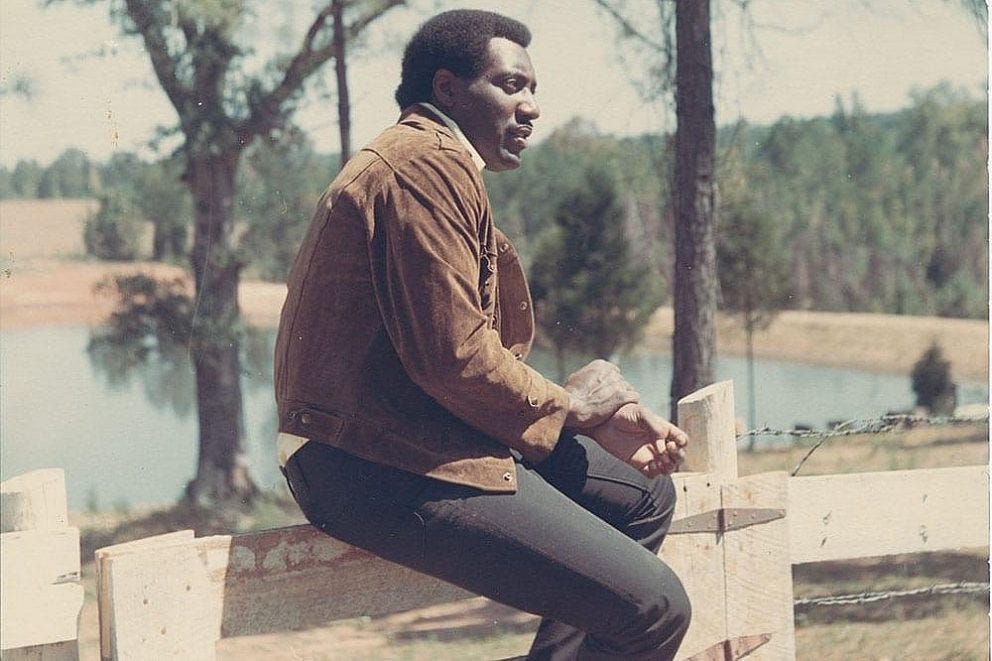
On this day in 1968, Otis Redding achieved an unorthodox feat, though he wasn’t alive to witness it. His swansong, ‘(Sittin’ On) The Dock of the Bay’, received the bittersweet distinction of becoming the first ever posthumous single to reach the number one-spot on the Billboard Hot 100.
Nicknamed the “King of Soul,” Redding was killed in a plane crash at just 26 years old on December 10, 1967, only 72 hours after he finished the second recording of the track. A departure from Redding’s raw R&B roots, the song represented a gentler, more pop-oriented direction for the artist. A career-defining masterpiece, it solidified his legacy as one of the greatest singers in music history. However, Redding’s success from beyond the grave was only the first in a long line of post-casuality triumphs.
In March 1971, Janis Joplin tragically scored her first number-one single with ‘Me and Bobby McGee’ several months after her death in October 1970. The cover - originally written by Kris Kristofferson and first performed by Roger Miller - became the second posthumous single to top the Billboard Hot 100 and the final statement of Joplin’s short-lived career.
By June 1980, shortly after the suicide of Ian Curtis at just 23 years old, Joy Division’s ‘Love Will Tear Us Apart’ topped the UK Indie Chart and reached number one in New Zealand, becoming the defining statement of the post-punk era. That same year, English compatriot John Lennon’s ‘(Just Like) Starting Over’ quickly climbed to number one on the US singles chart shortly after Mark David Chapman infamously gunned him down outside his New York City apartment.
In the decade that followed, hip-hop would experience its own morbid moment at the top. After the murder of Biggie Smalls in 1997, two singles from the posthumously released Life After Death - ‘Hypnotize’ and ‘Mo Money Mo Problems’ - reached number one on the Billboard Hot 100. The Notorious B.I.G. also holds the unusual honour of being the only artist to have two posthumous number-one records. The next year, Tupac Shakur, also murdered, repeated the pattern of his East Coast rival when ‘Changes’ topped the charts.
It wasn’t until 2002 that Nirvana’s ‘You Know You’re Right’ reached number one on the US Alternative chart. The track, completed eight years earlier, was the last to be recorded by the band before the suicide of their frontman, Kurt Cobain. After Cobain’s widow, Courtney Love, blocked surviving Nirvana members Dave Grohl and Krist Novoselic from using the track on a planned Nirvana box set in 2001 (believing it should instead appear on a more affordable singles compilation), the song was leaked online before eventually appearing on a greatest hits album.
Even in the streaming age, the pattern continues. Thanks to a featured appearance on Eminem’s ‘Godzilla’, Chicago rapper Juice WRLD earned a posthumous number-one spot on the UK Singles Chart. While the track failed to top the Billboard Hot 100, his posthumous album Legends Never Die debuted at number-one on both the Billboard 200 and the UK Albums Chart.
From soul to post-punk, rock to rap, these macabre achievements reveal an unsettling truth: an artist’s most significant, and sometimes finest, moment can often arrive after death, once they have nothing left to offer.
///
Thanks for reading.
Fancy joining our growing team? Drop us a message or an email to find out how you could write for Pop Valley.
popvalleypress@gmail.com
Instagram: popvalleypress