

The ghost of Jeffrey Epstein is haunting the British establishment.
It’s been almost six years since the release of the Netflix documentary, Filthy Rich, which chronicled the sex-related crimes of the disgraced financier and his accomplice, Ghislaine Maxwell.
Backed by interviews with witnesses, detectives and victims, the four-part series revealed the depth of Epstein’s sex trafficking network, and shone a bright light on a web of abuse and crime, and a social circle consisting of countless public figures, celebrities and politicians. The documentary covered a multitude of evidence, from Epstein’s first conviction in 2008, right up to his final arrest and subsequent death in 2019.
In August, it will be seven years since Epstein committed suicide.
However, despite all that time that has passed, the story hasn’t gone away. Instead, its plot has thickened, and the quantity of evidence we had originally been exposed to is arguably embryonic compared to what we know now.
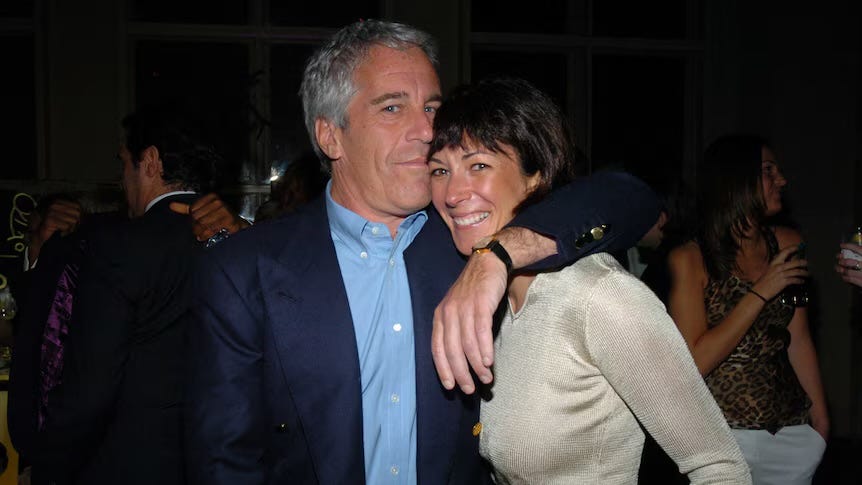
Despite being one of Donald Trump’s election campaign promises in 2024, the release of the Epstein Files appeared to be a pledge that his administration had attempted to distance themselves from.
After Congress passed the Epstein Files Transparency Act, and initially releasing a minuscule batch of files in December, with over 500 pages completely blacked out, the Department of Justice came under heavy bipartisan criticism, prompting them to release 3 million pages of documents in late January.
Unsurprisingly for anyone who has even lightly followed the Epstein case, Trump’s name appeared in the files a lot.
Whilst there were no new, major bombshells that threaten the President’s political security, there have been some developments in what we know of his well-documented friendship with Epstein and Maxwell - namely the timing of the friendships.
With that in mind, it is striking that these ramifications have landed not on a leading figure in U.S. politics, but on the British establishment instead.
Another person who was frequently mentioned in the files was Andrew Mountbatten-Windsor, formerly known as Prince Andrew, who was stripped of his royal titles in November after bringing shame on the British monarchy.
That, in itself, constitutes a scandal of historic proportions. But it also illustrates something bigger - the sheer depth of Epstein’s network has had unprecedented domino effect-like consequences. Not only did he ruin the lives of his victims when he was alive, but even from the grave he is tarnishing the reputations of several high-profile figures who were associated with him.
This association, in turn, acts as the trigger that sets off the chain reaction of reputational damage - that’s the Epstein effect.
And the latest figure to be caught up in it is Keir Starmer.
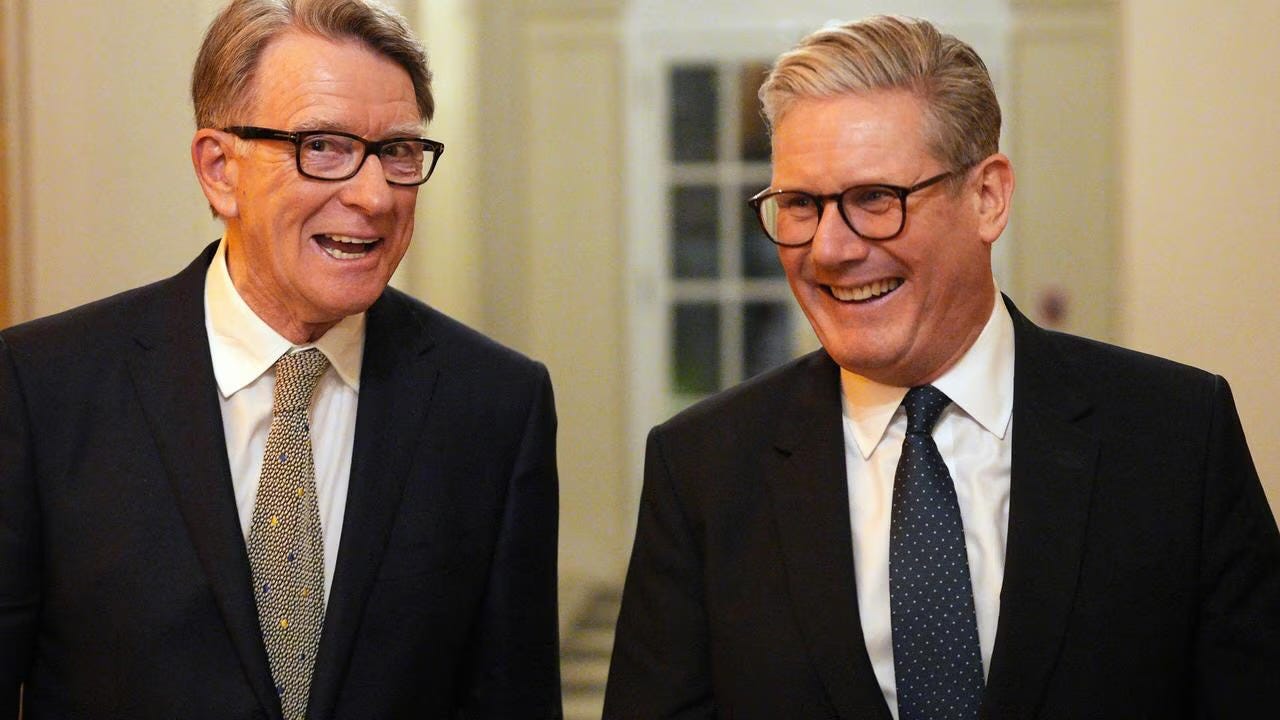
In September, Peter Mandelson’s position as Britain’s ambassador to the United States came under intense scrutiny after emails obtained by Bloomberg revealed the extent of his relationship with Jeffrey Epstein.
Among the disclosures were messages in which Mandelson - nicknamed “the Prince of Darkness” within British politics - referred to Epstein as his “best pal”. It also emerged that the former Labour MP for Hartlepool had stayed at Epstein’s New York apartment while Epstein was serving his first prison sentence for soliciting a minor.
As the controversy intensified, Keir Starmer sacked Mandelson, and for a time the issue appeared to have been put to bed.
However, in the January release of the Epstein Files, it was revealed that Mandelson and his husband had received upwards of $75,000 from the sex offender.
In an email sent to Epstein on the day of his release from prison in 2008, Mandelson congratulated him on his “liberation day”.
And as if that wasn’t enough, it also became apparent that Mandelson had been passing sensitive information on to Epstein. Details the 2008 financial crash and the dealings of Gordon Brown’s cabinet, of which Mandelson was a part of at the time, secret tunnels between Downing Street and the Ministry of Defence, and advance notice of a €500bn EU bail-out are just some of the examples.
The Met Police have launched a full investigation as to whether or not Mandelson committed misconduct while in public office, and he has since resigned from the House of Lords.
Naturally, Sir Keir came under heavy fire from opposition MPs, and was interrogated on just how much he actually knew about the relationship between Mandelson and Epstein when he appointed him as ambassador.
“Mandelson betrayed our country, our Parliament and my party. He lied repeatedly to my team when asked about his relationship with Epstein, before and during his tenure as ambassador. I regret appointing him.”
- Starmer during PMQ’s on Wednesday
In response to a relentless and ruthless opposition leader, Kemi Badenoch, the Prime Minister eventually admitted that the official security vetting did in fact mention Mandelson’s ongoing relationship with Epstein.
He then vowed to publicly release documentation of the due diligence process, so that the House of Commons “will see for itself the extent to which, time and time again, Mandelson completely misrepresented the extent of his relationship with Epstein and lied throughout the process.”
Starmer iterated however, that there will be exemptions which could prejudice national security.
Badenoch then moved on to implicate Morgan McSweeney, Starmer’s closest aide and chief of staff, describing him as Mandelson’s “protege”.
“The Prime Minister chose to inject Mandelson’s poison into the heart of his Government on the advice of Morgan McSweeney.”
- Kemi Badenoch during PMQ’s on Wednesday
“Morgan McSweeney is an essential part of my team. He helped me change the Labour party and win an election,” replied the Prime Minister when asked if he still held confidence in his right-hand man. “Of course I have confidence in him.”
McSweeney resigned four days later.
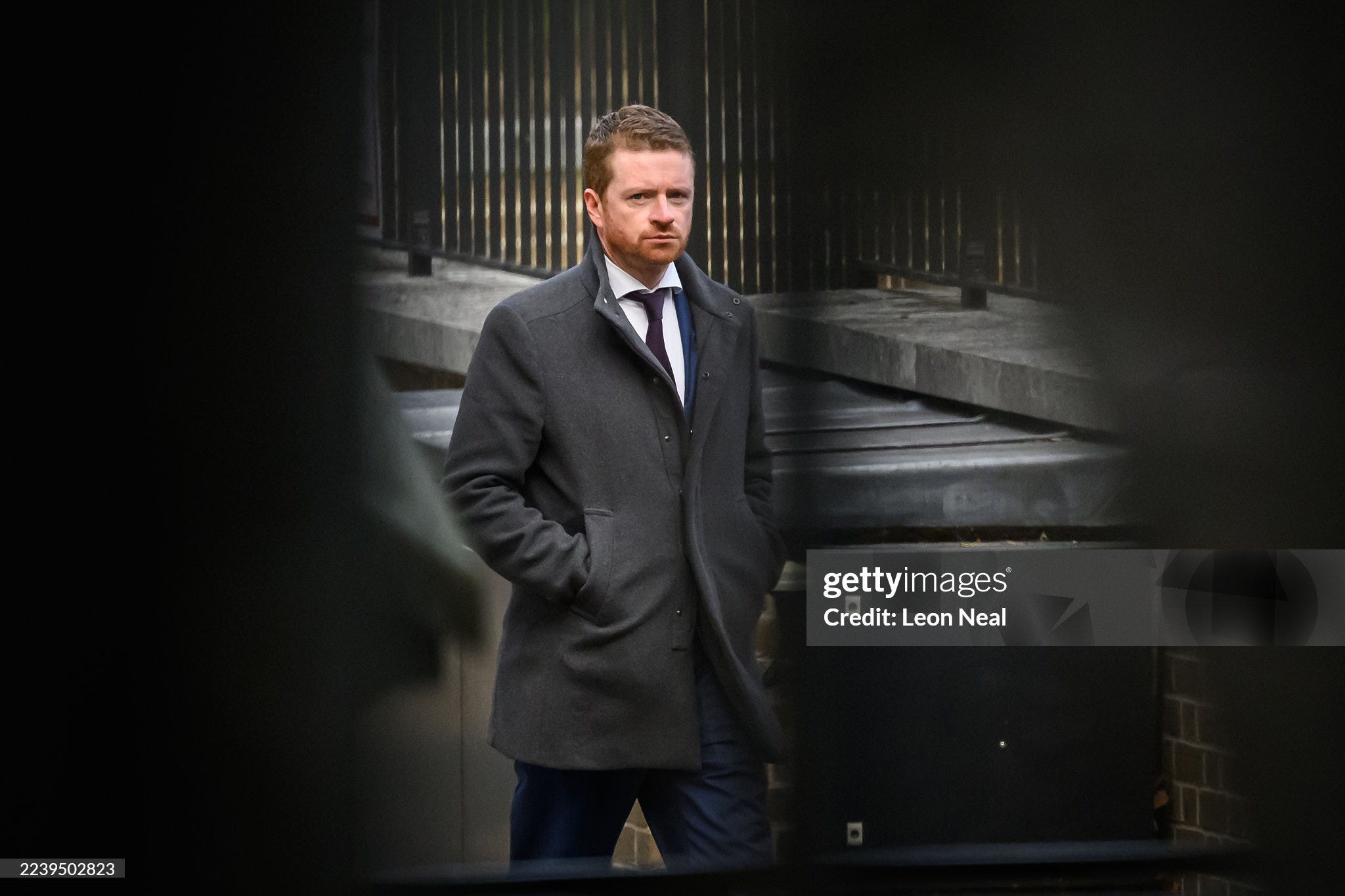
The political strategist, credited with being the mastermind behind Starmer’s 2020 leadership campaign and, more importantly, his 2024 general election win, quit after a mutiny amongst several Labour MPs called for someone to be held accountable for the Mandelson scandal.
In a statement, McSweeney said: “The decision to appoint Peter Mandelson was wrong. He has damaged our party, our country and trust in politics itself. When asked, I advised the prime minister to make that appointment and I take full responsibility for that advice.”
As Labour’s campaign director, McSweeney led the party’s 2024 general election strategy, including a candidate selection process that marginalised left-wing figures.
“I remain fully supportive of the prime minister. He is working every day to rebuild trust, restore standards and serve the country. I will continue to back that mission in whatever way I can. It has been the honour of my life to serve.”
- Morgan McSweeney in his resignation statement
It’s clear that the Prime Minister’s right-hand man has fallen on his sword and taken the blame for the Mandelson appointment. Still, there are questions whether this sacrifice is enough to put the matter to bed once and for all.
For a government that has described itself as being “committed to halving violence against women”, the electorate have had every right to demanding accountability, but some are still unsatisfied.
There have been developed calls for the PM himself to step down, a notion which Starmer would have deemed unthinkable just a couple of weeks ago.
The fact of the matter is, he is now very isolated. Without Morgan McSweeney, who has been described as a “proxy” Prime Minister - the real decision maker in government - Starmer has a real, noticeable lack of allies.
“He has lost all authority to govern,” said Julia Lopez, shadow business secretary, on Thursday night’s Question Time. “Even his own MPs aren’t listening to him.”
While some of his MPs, particularly those on the left, may be baying for blood, it’s unclear who might pose a challenge. And it’s been argued that it’s the lack of alternative options in terms of potential leaders that is the only thing keeping the Prime Minister in power.
Starmerites, meanwhile, are warning Labour to be careful what they wish for.
Quite frankly, they’re saying it wasn’t supposed to be like this.
Starmer is famously, or perhaps infamously, considered boring. And that, in turn, was expected to signal the end of the unstable, melodramatic reign of the Conservatives which Britain endured since David Cameron’s resignation in 2016. Channel 4’s Gary Gibbon described the saga as “the final series in the box set of the Tory years.”
However, with the Gorton and Denton by-election in just a couple of weeks, and the local elections coming in May, in which Labour sources have said they are “facing a drubbing”, it’s becoming increasingly unclear how Keir Starmer will withstand the next few months.
What does remain clear, is that the Epstein effect has well and truly arrived in the corridors of Westminster, and its consequences are far from over.