

On March 3rd, 1983, Peter Ivers was found dead in his Los Angeles apartment. He lay fully clothed, his shoes off, the light still on. The apartment was strewn with clothes, and the expensive audio equipment he had amassed over the years was missing. Conflicting accounts have been given on whether the door was jimmied or left open, but one fact remains beyond any doubt: Ivers had been bludgeoned to death in his bed. The murder weapon - a large hammer - was found nearby.
Upon being discovered by a neighbour, a crime scene - one that soon devolved into a farce - was set up. News of Ivers’s death spread fast. Many of his friends and associates arrived at the scene before the police, drifting in and out, disturbing evidence - some even took souvenirs. When officers arrived, their questions soon turned from an attempt to find the killer to an attempt to force the investigation into an open-and-shut case.
Ivers’s friends were pressed to reveal details about his lifestyle, sexuality, and who he spent time with - especially his association with the punk scene, as if its subversive nature explained his death. To the police, Ivers’s death fit the narrative: another casualty of LA’s rocketing crime, another young artist swallowed up and spat out. After all, it was a time when serial killers ran rampant in the city - the Hillside Stranglers, the Freeway Killer, the Night Stalker, the Sunset Strip Killer, the Toolbox Killers. Perhaps Ivers had simply been unlucky.
The prevailing theory became one of a home invasion gone wrong. The missing equipment fit the profile of an opportunist from nearby Skid Row or Ivers’s equally dodgy neighbourhood. A known serial burglar in the area, who fell to his death just weeks later, became suspect no. 1, though nothing was ever proven. Other theories circulated - some plausible, some outrageous.
A known ladies’ man, Ivers was entangled with various married women; one rumour even named the wife of soon-to-be Ghostbusters star Harold Ramis. Could it have been a crime of passion - the ultimate fuck you from a lovesick husband? Others blamed his alleged debts: a $25k drug debt owed to a Samoan gang he was supposedly dealing for, or a Sikh gang he was organising a massive MDMA deal with - though friends claimed he didn’t touch hard drugs. Then there’s the bouncer from the Zero - a punk club that Ivers regularly attended. A violent white supremacist, rapist, and addict who had “keep on sucking” tattooed on his stomach and who openly disliked Ivers doesn’t seem to be an outlandish suspect. Yet he, too, was soon ruled out.
The most haunting suspect, however, was the man Ivers was said to be inseparable from at points: David Jove. “Acid King,” filmmaker, businessman, occultist, a mysterious figure of shifting identities. It was claimed by those close to the pair that he was more than capable of such a crime. The fact that Jove was seen lurking around a hidden stairwell as police arrived on the scene of Ivers’s death and took home the bloodied blanket wrapped around his friend only deepened suspicions.
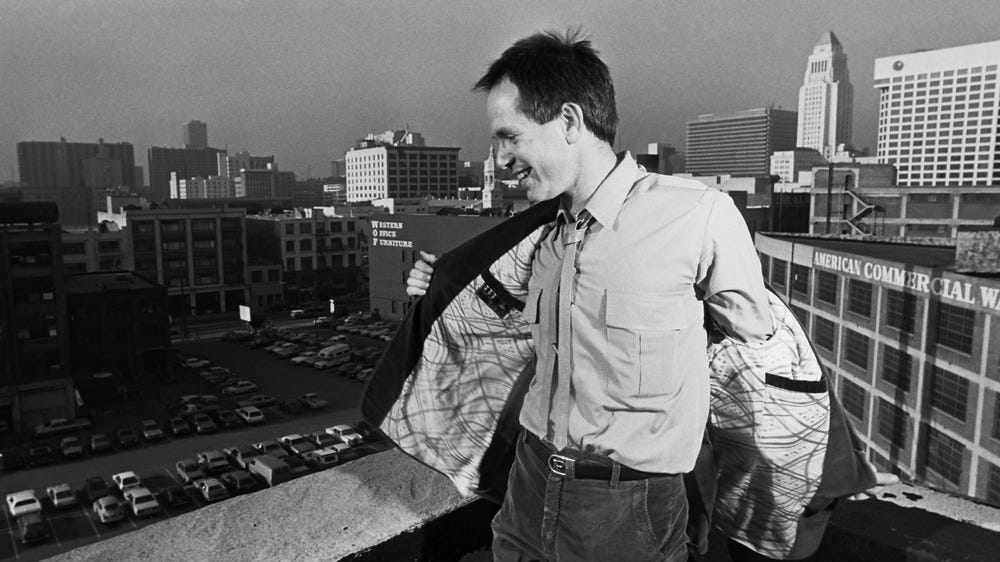
On paper, Ivers’s life story reads like a pop-folk version of Little Big Man - a wild odyssey through ’80s LA that ended too soon. Born in Brookline, Massachusetts, to a free-spirited mother who picked their last name at random from a phone book after his father passed, Ivers was destined to defy convention. As a student at Harvard, he became known for his intellect - reportedly of genius level - and became best friends with National Lampoonfounder Doug Kenney, who would meet a similarly tragic end three years before Ivers.
After graduation, Ivers and his longtime partner, Lucy Fisher, settled in the counterculture bohemia of Laurel Canyon. Their home soon became a carousel-like drop-in stop for the area’s artists, creatives, and dreamers. Kenney would crash on the sofa when the Lampoon became too much, while David Lynch popped round for coffee.
Before LA, Ivers had built a reputation in Boston as a harmonica virtuoso - Muddy Waters once called him the best alive - and he carried that reputation west. Convinced by his mercurial charisma, Warner Bros. signed him to a $100,000 solo artist contract. However, while he could play the part of the mad genius, jumping on tables and bursting into harmonica solos while gyrating his hips in the faces of bigwig execs, his albums sold poorly. Instead, he turned to film scoring, earning acclaim for his work on Ron Howard’s Grand Theft Auto, and perhaps his best-known contribution to pop culture: creating the ‘In Heaven (Lady in the Radiator Song)’ for Lynch’s seminal debut, Eraserhead.
Another pivotal moment came in 1981. A fixture on the city’s nightlife scene, Ivers could often be seen speeding through LA in his shitty convertible, seeking out the next party. It was at one of these parties that he met Lotus Weinstock, the ex-wife of legendary comedian Lenny Bruce and then-wife of David Jove. Through Lotus came Jove. The two became acquainted, and soon after, Ivers was asked to host Jove’s brand-new late-night talk show, New Wave Theatre, the day before its debut. It would ultimately become the most iconic - and fatal - role of Ivers’s life.
Click here for part 2.
Thanks for reading.
Fancy joining our growing team? Drop us a message or an email to find out how you could write for Pop Valley.
popvalleypress@gmail.com
Instagram: popvalleypress